Scientific Activities
Upcoming in 2027
The SHP and the Transitions from Education to Employment (TREE) survey are jointly organizing the conference Dynamics of Life and Society which will take place on 8–9 June 2027 at the University of Bern. On June 7, a pre-conference workshop will be organized to introduce participants to the SHP and/or TREE data.
The deadline for the submission of paper presentations and session proposals is January 15, 2027. See our call here.
Please find more information here.
Past events
2026
The SHP workshop took place in Lausanne between June 2nd and June 4th, 2026. On the first day, the SHP team gave an introduction to the Swiss Household Panel study and data management using SPSS, and on days two and three, Ursina Kuhn and Oliver Lipps from FORS, in collaboration with Claire Mariano (UNIL), gave a workshop on fixed effects models using the SHP.
2025
On June 4-5, 2025, the SHP and TREE (Transitions from Education to Employment) celebrated 25 years of longitudinal surveys in Switzerland.
Please find all the information here.

Currently, our research network has more than 1’500 registered members coming from a wide range of disciplines: sociology, economics, political science, public health, psychology, statistics, education and geography. The SHP data are not only used by academic institutions in Switzerland and abroad, but also by the public administration.
Members of the research network who wish to make changes to their profile can do that directly on SWISSUbase.

You can also access the Zotero database for more complex search options.
If you have worked with the Swiss Household Panel and miss your publication in this list, or if you want to announce a new publication, please send the complete reference to swisspanel@fors.unil.ch. Thank you for your collaboration.
The data is designed to allow cross-national researchers to access a simplified version of these panels with guidelines for formulating equivalent variables across countries.
An article (Frick et al. 2007) describing the CNEF project can be downloaded here.
The CNEF variables of the SHP can be obtained via two channels:
- Download CNEF variables of the SHP via SWISSUbase.
- Access CNEF data of all member countries via the CNEF-Homepage.
The CNEF data and documentation can be obtained via the CNEF-Homepage. However, to access CNEF versions of the data you must (1) apply to the provider in each country for permission and (2) contact the CNEF-project team to receive your copy of the cross national dataset.
See also: Turek, C., Kalmijn, M., Leopold, T. 2020. Comparative Panel File: Household Panel Surveys from Seven Countries.
The LIB has been developed at the LabFam, University of Warsaw, by Ewa Weychert, Beata Osiewalska, Lucas van der Velde, and Anna Matysiak and includes the following databases:
Germany: SOEP (German Socio-Economic Panel)
Switzerland: SHP (Swiss Household Panel)
UK: BHPS/UKHLS (British Household Panel Survey; UK Household Longitudinal Study)
Italy: FSS (Family and Social Subjects Survey)
US: PSID (Panel Study of Income Dynamics)
Australia: HILDA (Household, Income, and Labour Dynamics in Australia Survey)
2026
Politische Spaltung der Geschlechter: Sind junge, rechte Männer das Problem? Von wegen!
NZZ, May 30, 2026
Beziehungsstatus: Noch komplizierter – junge Frauen werden progressiver, junge Männer traditioneller
Tagesanzeiger, April 17, 2026
Opinions plus tranchées, citoyen-nes plus engagé-es : le paradoxe de la polarisation politique en Suisse
De Facto, March 17, 2026
Courriers ciblés, préservatifs taxés: jusqu’où vont les Etats pour relancer la natalité?
Le Nouvelliste, March 15 2026
«La Suisse est l’un des pays les plus polarisés d’Europe»
Watson, January 24, 2026
Wieso gehen immer weniger junge Menschen eine Beziehung ein?
Tagesanzeiger, January 15, 2026
2025
De plus en plus de jeunes tournent le dos au couple
24 heures, December 28, 2025
La crise du couple pèse aussi sur la natalité
24 heures, December 28, 2025
La vie à deux attire de moins en moins les jeunes
Le Matin Dimanche, December 28, 2025
Wie wir mehr Kinder kriegen: Sechs Ideen gegen den Geburtenrückgang
Tagesanzeiger, Dezember 1, 2025
Pourquoi les Suisses renoncent de plus en plus à faire des enfants
24 heures, November 12, 2025
Pourquoi les Suissesses veulent «deux enfants, sinon aucun»
Watson, October 6, 2025
«Au-delà de la tradition ? Répartition du travail rémunéré et domestique au sein des couples en Suisse»
DeFacto – plus que des opinions, August 2, 2025
«Tradition überwunden? Wie Erwerbstätigkeit und Hausarbeit bei Schweizer Paaren aufgeteilt werden»
DeFacto – belegt, was andere meinen, July 30, 2025
«Wenn du dich um keine Frau kümmerst, wer bist du überhaupt?»
Tagesanzeiger, May 19, 2025
Rezepte gegen die 2-Kind-Norm
Freiburger Nachrichten, April 28, 2025
Jamais le taux de fécondité n’avait été aussi bas en Suisse
Valérie-Anne Ryser, Senior Researcher at the SHP
RTS – Forum, April 5, 2025
Divorce: Les femmes payent le prix fort
Dorian Kessler, Professor at Bern University of Applied Sciences
RTS – Forum, March 18, 2025
Même chez les couples progressistes, des freins à une répartition du travail égalitaire
Le Temps, March 13, 2025
2024
Sind Sie ein ängstlicher Typ?
Tagesanzeiger, October 18, 2024
Sind Sie risikoscheu?
Tagesanzeiger, September 20, 2024
Jeunesse, lʹultra moderne solitude
Marieke Voorpostel, Deputy head of group SHP
RTS La 1ère – Les Echos de Vacarme, September 15, 2024
Les Suisses ont un bon moral mais sont inquiets face à l’avenir (starting at minute 15)
Valérie-Anne Ryser, Senior Researcher at the SHP
RTS – La Matinale, September 5, 2024
Deux jeunes hommes sur trois sont célibataires en Suisse
24 heures, July 31, 2024
Il faut se préparer à un avenir sans enfants
Le Matin Dimanche, July 28, 2024
Einsamkeitsepidemie der Männer: Zwei von drei jungen Schweizern haben keine Beziehung
Tagesanzeiger, July 26, 2024
Glauben Sie an Gott?
Tagesanzeiger, May 3, 2024
Also doch Helikoptereltern
NZZ am Sonntag, March 17, 2024
Die Qual der Männer auf dem Liebesmarkt: Die Zahl der unfreiwilligen Junggesellen in der Schweiz wächst
NZZ am Sonntag, February 24, 2024
Faut-il inciter la population suisse à faire des enfants?
Valérie-Anne Ryser, Senior Researcher at the SHP
RTS – Forum, January 23, 2024
2023
Soziologin Laura Bernardi über das Phänomen unfreiwillige Single-Männer
Blick, December 4, 2023
In This Country, Most People Rent for Life. Is That Really What They Want?
The New York Times, November 6, 2023
Eclairage et commentaires de certains des résultats d’un grand sondage d’opinion de la SSR à la lumière de l’enquête «Vivre en Suisse»
Valérie-Anne Ryser, Senior Researcher at the SHP
RTS – Forum, August 23, 2023
Clémentine Rossier, démographe: «La plupart des jeunes Suisses disent vouloir des enfants, beaucoup n’en font pas»
Le Temps, August 1, 2023
Pourquoi les Suisses font moins d’enfants ?
Interview with Valérie-Anne Ryser, Senior Researcher at the SHP
RTS – Forum, July 19, 2023
Et si on touchait l’AVS en fonction du nombre d’enfants?
20 Minutes, July 16, 2023
Trend zur Kinderlosigkeit beschleunigt sich markant
NZZ am Sonntag, July 16, 2023
Rise of voluntary childlessness poses a demographic challenge in Switzerland
The Rising Nepal, July 1, 2023
Erst teuer studieren, dann Steuern optimieren
NZZ am Sonntag, March 12, 2023
La santé, cette oubliée du débat
Le Temps, February 1, 2023
Bin ich optimistisch?
Tagesanzeiger, January 27, 2023
Mariage, un rêve et des promesses
Interview (French) with Valérie-Anne Ryser, Senior Researcher at the SHP
RTS – Les Echos de Vacarme, January 15, 2023
2022
Faut-il introduire en Suisse le PACS pour tous?
Interview (French) with Valérie-Anne Ryser, Senior Researcher at the SHP
RTS – Forum, November 15, 2022
Klima und Umweltfragen mobilisieren alle Generationen
higgs, February 22, 2022
Frauen haben weniger Interesse an Vollzeitjobs – nicht nur wegen der Kinder
Tagesanzeiger, February 21, 2022
Klima und Umweltfragen mobilisieren alle Generationen
DeFacto, February 7, 2022
2021
La pandémie est un pas en arrière en matière d’égalité
24 Heures, November 10, 2021
Comment les couples deviennent (presque) des sosies
24 Heures, July 27, 2021
Die Pandemie bedeutete nicht für alle mehr Stress
NZZ, July 12, 2021
Sie wollen ihr Vor-Corona-Leben nicht zurück: Warum rekordviele Menschen eine Firma gründen
Luzerner Zeitung, July 10, 2021
Le semi-confinement a déstressé les plus aisés
Le Temps, July 7, 2021
Coronavirus: la première vague a été une pause pour les personnes stressées
Le Nouvelliste, July 6, 2021
- Same article also published in La Côte
La pandémie, une pause pour les personnes stressées
RTS info, July 6, 2021
Les bas revenus ont davantage souffert de la pandémie
SWI swissinfo, June 24, 2021
Geringverdienende bekommen Corona-Pandemie stärker zu spüren
Argovia Today, June 24, 2021
- Same article also published in the Blick “Arme sind stärker von Pandemie betroffen“
Persone con basso reddito più colpite dalla pandemia
laRegione, June 24, 2021
Gesünder leben trotz Corona?
Die Volkswirtschaft, May 19, 2021 (FR)
Der Lockdown ist auch ein Stresskiller
Tages-Anzeiger, March 24, 2021
Gleichstellung in der Schweiz: Erwerbstätigkeit von Müttern noch immer wenig akzeptiert
BEEHIVE, February 20, 2021
Les jeunes plus conservateurs sur l’égalité hommes-femmes?
24 heures, February 13, 2021
- Same article also published in Tribune de Genève
«La participation des femmes au marché du travail est plébiscitée tant qu’elles n’ont pas d’enfant», conclut une étude
Le Temps, February 10, 2021
«The participation of women in the labor market is popular as long as they have no children», concludes a study
World Today News, February 10, 2021
Sciences sociales: les milléniaux ont des attitudes de genre plus traditionnelles
Le Nouvelliste, February 9, 2021
- Same article also published in La Côte
Egalité des genres: l’emploi des mères toujours mal accepté
HR Today, February 9, 2021
Sui ruoli uomo-donna i Millennials sono tradizionalisti
laRegione, February 9, 2021
I millennial non conoscono la parità di genere
Ticinonline, February 9, 2021
Millennials hanno visione tradizionale ruoli uomo e donna, studio
SWI swissinfo, February 9, 2021
Contact
For further information, please send us an e-mail:
swisspanel@fors.unil.ch
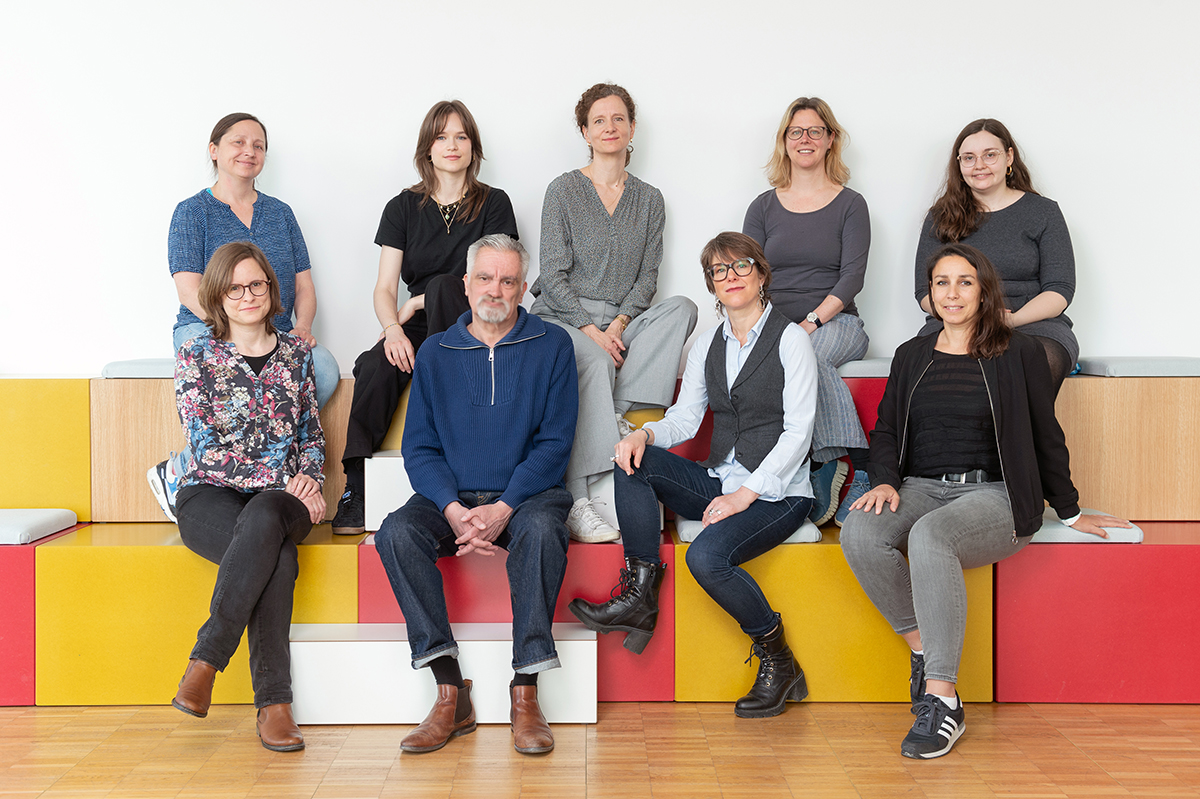
Click here to learn more about the staff of the Swiss Household Panel and to contact us individually.